Views: 0 Author: Site Editor Publish Time: 2026-07-13 Origin: Site

Commercial facilities face a growing demand for secure, high-engagement indoor play spaces. Family entertainment centers, daycares, retail spaces, and play cafes all recognize the value of keeping children active and entertained. However, facility operators constantly battle the challenge of balancing child safety and liability mitigation with the need for highly durable, positive-return play structures. These environments endure heavy daily use, requiring materials that can withstand constant impact, friction, and cleaning.
This technical procurement guide moves beyond basic definitions to evaluate material specifications, safety compliance, and vendor selection. Understanding the engineering and regulatory requirements behind Soft Play Equipment ensures your facility remains safe and compliant for years to come.
Material Integrity Dictates Lifespan: Commercial-grade soft play equipment relies on high-density polyurethane foam and tear-resistant, fire-retardant, phthalate-free PVC/vinyl wrapping to ensure longevity and safety.
System Differentiation is Key: Buyers must distinguish between modular soft play (primarily foam-based for toddlers) and traditional indoor playground equipment (steel-framed, multi-level structures for older kids).
Compliance is Non-Negotiable: Validating equipment against international safety standards (e.g., ASTM F1918, EN 1176) is critical for insurance underwriting and liability protection.
Age-Segmented Design Drives ROI: Structuring play zones specific to infants, toddlers, and older children maximizes facility capacity, extends family dwell time, and reduces injury risks.
Table of Contents
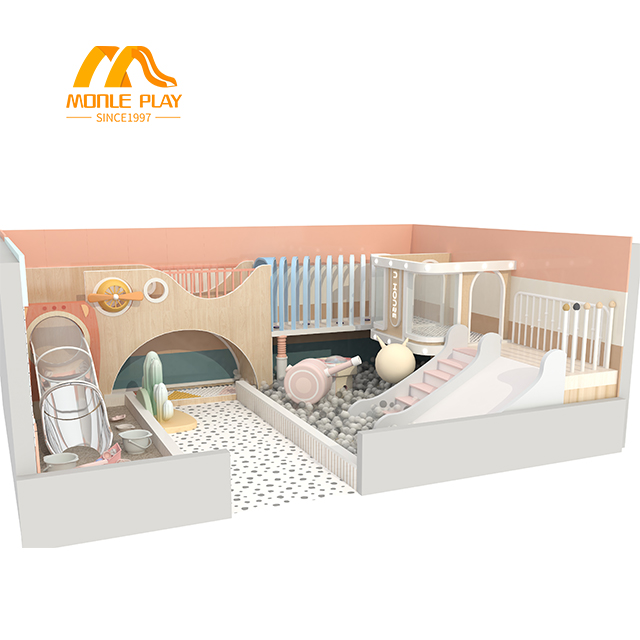
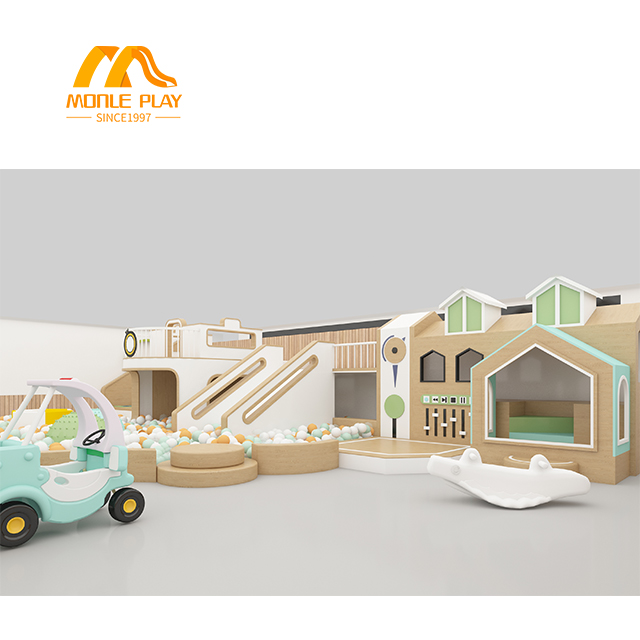
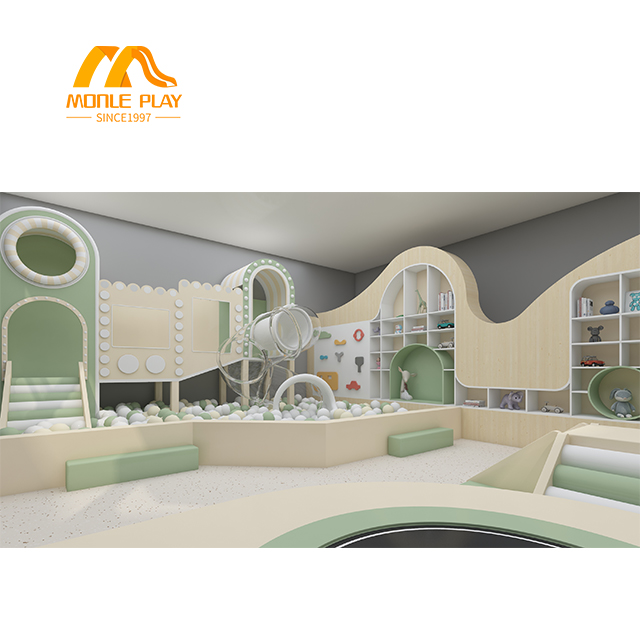
Soft play structures are specialized play environments built from dense foam cores wrapped in heavy-duty, padded synthetic fabrics. Manufacturers typically use commercial-grade PVC or vinyl for the outer casing. These designs facilitate safe, impact-free play for young children. The primary purpose is to create an enclosed, cushioned environment where kids can slide, climb, roll, and fall safely. By removing hard edges and rigid surfaces, facilities drastically reduce the risk of high-impact injuries, allowing for uninhibited physical exploration.
In the field, you will see these setups in dedicated toddler zones, waiting areas, and large-scale family entertainment centers. The equipment absorbs kinetic energy. When a child jumps or falls, the foam compresses and disperses the force, preventing bruising or fractures. This mechanical property makes it the standard for early childhood recreation spaces.
The anatomical structure of these play items dictates their performance and longevity. Internal structural framing forms the skeleton of larger structures, often utilizing premium timber or galvanized steel. Surrounding this frame is the core padding, consisting of high-density, impact-absorbing polyurethane foam. The outer casing features heavy-duty, non-toxic, anti-microbial PVC or vinyl.
Manufacturing techniques play a critical role in safety. Double-reinforced stitching, welded seams, and hidden or recessed zippers prevent children from accessing the internal foam. These hidden closures also eliminate scratch hazards and prevent moisture from penetrating the foam core during cleaning. If moisture breaches the vinyl casing, mold and mildew will rapidly develop inside the foam, requiring complete replacement of the unit.
Foam Core: Typically 1.5 to 2.0 lbs/ft⊃3; density polyurethane.
Vinyl Casing: 18oz to 22oz knife-coated PVC, treated for UV and microbial resistance.
Stitching: Heavy-duty nylon thread, double-stitched at stress points.
Hardware: Concealed zippers and recessed Velcro attachments.
Facility operators must understand the difference between soft play and hard play. Soft play involves foam-filled shapes, rockers, and ball pits designed for tactile, low-impact sensory engagement. Hard play utilizes molded plastics, fiberglass, and exposed metals. In the commercial amusement industry, soft play typically targets infants and toddlers between the ages of zero and five, focusing heavily on sensory-motor skills.
Conversely, traditional indoor playground equipment refers to larger, steel-frame multi-level climbing structures designed for older children. Maintenance trade-offs exist between the two. Foam and vinyl structures require specialized sanitization protocols to prevent vinyl degradation and cracking. Hard play surfaces offer easier washdown procedures but carry significantly higher impact injury risks, necessitating thicker safety surfacing underneath.
Feature | Soft Play Equipment | Traditional Indoor Playgrounds | Hard Play Structures |
|---|---|---|---|
Primary Material | Polyurethane foam, PVC/Vinyl | Galvanized steel, netting, plastic | Molded plastic, fiberglass |
Target Age Group | 0-5 years (Infants/Toddlers) | 5-12 years (School-age) | Varies (often outdoor or wet play) |
Impact Absorption | High (inherent to the equipment) | Moderate (relies on floor padding) | Low (requires thick safety surfacing) |
Maintenance Focus | Vinyl integrity, seam inspection | Structural bolt tightening, netting tension | Surface cleaning, crack inspection |
Play zones for the youngest demographic focus strictly on low-height, floor-based equipment. Common elements include soft play rockers, foam climbing shapes, step-and-slide combinations, puzzle mats, and shallow ball pits. The design prioritizes specific developmental milestones, such as gross motor skills, spatial awareness, and sensory engagement.
Because toddlers require constant monitoring, these zones demand high-visibility sightlines. Facility layouts must allow parents and caregivers an unobstructed view of the entire play area from adjacent seating. Perimeter walls for these zones are usually low-profile foam barriers, keeping crawling infants contained while allowing adults to step over easily in case of an emergency.
Install low-profile perimeter barriers to contain crawling infants.
Place high-contrast sensory mats near the entrance of the zone.
Position step-and-slide units in the center to allow 360-degree parental access.
Ensure ball pits are shallow (under 12 inches deep) to prevent submersion risks.
As children grow, their play requires more complex physical challenges. Preschool zones feature intermediate structures like mini-climbers, soft balance beams, foam crawl tunnels, and interactive soft wall panels. These components bridge the gap between basic crawling and advanced climbing. They encourage cooperative play, basic risk assessment, and peer socialization.
Children learn to navigate shared spaces, wait their turn on slides, and interact with tactile wall panels that stimulate cognitive development alongside physical exertion. The foam density in these areas is often slightly firmer to support the increased weight and dynamic movement of older preschoolers without bottoming out against the subfloor.
Older children require dynamic, multi-level environments. Integrated play frames combine enclosed slides, foam obstacle courses, climbing ramps, and interactive sensory panels built within larger steel assemblies. These structures demand rigorous engineering. Load-bearing soft structures must support the weight and kinetic energy of older, heavier children.
Structural netting must be tensioned correctly to prevent falls from elevated platforms. Furthermore, impact attenuation on landing zones becomes critical, requiring thicker, higher-density foam mats at the base of slides and climbing walls. Installers must secure all foam padding to the steel framework using heavy-duty zip ties, ensuring the ties are cut flush and rotated away from child contact areas to prevent lacerations.
Compliance dictates facility legality and insurance eligibility. Buyers must demand specific certifications from manufacturers. In the United States, ASTM F1918 governs soft contained play equipment, while EN 1176 and EN 1177 serve as the primary standards in Europe. These regulations dictate structural integrity, entrapment hazards, and material toxicity.
Additionally, facilities must consider inclusive play design. Adhering to ADA guidelines or regional equivalents ensures that ground-level sensory play elements remain accessible to children with mobility challenges, broadening the facility's demographic reach. Inspectors will check for head entrapment zones, ensuring all gaps are either too small for a child's torso to pass through or large enough that a head cannot get stuck.
Evaluating material quality requires a strict framework. Buyers should assess PVC thickness, typically measured in millimeters or ounces per square yard, alongside tear strength ratings. Foam density ratings, measured in kilograms per cubic meter or pounds per cubic foot, determine how long a block will retain its shape under constant compression.
UV resistance is necessary if the equipment sits exposed to natural sunlight through facility windows, as UV rays rapidly degrade and discolor inferior vinyl. Furthermore, fire-retardant certifications, such as NFPA 701 or BS 5852, are mandatory for all textiles and foams used in indoor commercial spaces to prevent rapid flame spread. Request physical material samples from vendors before finalizing any large procurement order.
Material Component | Minimum Commercial Specification | Testing Standard / Certification |
|---|---|---|
PVC/Vinyl Casing | 18oz/sq yd, Knife-coated | NFPA 701 (Fire Retardant) |
Polyurethane Foam | 1.5 lbs/ft⊃3; Density | ASTM D3574 (Compression/Tear) |
Structural Netting | Knotless nylon, 50mm mesh | ASTM F1918 (Entrapment) |
Floor Padding | EVA foam or dual-density PU, 2-inch min | EN 1177 (Impact Attenuation) |
Effective space planning directly impacts safety and revenue. Operators must calculate maximum occupancy based on the equipment footprint and mandatory safety fall zones. These fall zones represent the clear space required around active play structures to prevent collisions. Modular systems offer distinct advantages for growing facilities.
They allow operators to expand, reconfigure, or replace individual sections without overhauling the entire playground. This scalability ensures the play area can evolve alongside the business, adapting to changing foot traffic patterns and customer preferences. Always leave a minimum of 36 inches of clear walkway around the perimeter of the play zone for emergency egress and maintenance access.
Analyzing upfront costs requires looking beyond the sticker value of the equipment. Custom-designed structures require extensive engineering and architectural planning, whereas pre-fabricated or off-the-shelf components offer faster deployment. Buyers must factor in hidden procurement costs that impact the final capital outlay.
International freight, import duties, structural engineering stamps required by local municipalities, and professional installation fees all contribute to the initial investment. Proper budgeting requires comprehensive quotes that include delivery to the facility floor. Site preparation, including leveling floors and modifying HVAC ducts to clear tall structures, must also be factored into the initial build-out budget.
Long-term success depends on understanding daily, weekly, and monthly maintenance requirements. Operators must utilize specialized, non-corrosive, non-toxic cleaning agents. Harsh chemicals degrade vinyl coatings, leading to premature cracking and foam exposure. Forecasting replacement cycles for high-wear items is also necessary.
Ball pit balls crush over time, vinyl joint covers wear down from foot traffic, safety netting loses tension, and zip ties require periodic replacement to maintain structural integrity. Establish a daily inspection log to identify small tears in the vinyl before they expand. Patching a small puncture immediately prevents moisture ingress and extends the life of the foam core.
High-quality equipment directly correlates to positive business outcomes. A facility that boasts superior safety standards and pristine equipment can sustain lucrative membership models. Dedicated play zones increase family dwell time. The longer a family stays in the facility, the higher the probability of secondary spend on food, beverages, and retail items.
Designated infant and toddler zones also open alternative revenue streams, allowing operators to host private events, birthday parties, and weekday playgroups during off-peak hours. Clean, well-maintained equipment serves as a primary marketing tool, driving word-of-mouth referrals among parent groups.
Proper installation guarantees structural safety. Self-installation carries severe risks, including voided manufacturer warranties, potential structural failure, and insurance non-compliance. Hiring certified installation teams ensures the equipment meets all engineering specifications. Pre-installation site inspections are equally vital.
Installers must verify ceiling height clearances, account for HVAC diffuser placement, ensure emergency exits remain unobstructed, and implement column wrapping to pad exposed building supports within the play zone. Uneven subfloors will cause modular foam blocks to separate, creating trip hazards. Always ensure the concrete or subfloor is leveled before laying the base mats.
Conduct a laser-level survey of the installation floor.
Map out all overhead obstructions, including sprinkler heads and lighting fixtures.
Verify the location of load-bearing walls for anchoring tall structures.
Stage all materials in a climate-controlled area 24 hours before assembly to allow vinyl to acclimate.
Execute a post-installation walkthrough with the lead engineer to verify all safety netting tension.
Vetting manufacturers requires a strict checklist. Buyers must verify third-party safety testing certificates rather than relying on self-reported data. Reviewing warranty terms is critical; operators should understand the difference between coverage for structural steel frames versus wear-and-tear items like vinyl covers.
Assessing the availability and lead time of replacement parts ensures minimal downtime when components inevitably wear out. Buyers should exercise extreme caution regarding white-label importers who lack direct control over manufacturing quality, raw material sourcing, and post-sale engineering support. Request references from facilities that have operated the vendor's equipment for at least three years to gauge long-term durability.
Sourcing the right play infrastructure involves aligning rigorous material selection, spatial constraints, and safety compliance. Facility operators should utilize age-segmented zoning to protect users and maximize floor capacity, while choosing knife-coated PVC and high-density foam to withstand daily commercial foot traffic.
To streamline engineering plans and overcome structural layout challenges, collaborating with a premier global manufacturer is essential. As an innovative leader in high-end indoor entertainment manufacturing, Zhejiang MonleToys engineers robust soft play equipment, customizable multi-level active mazes, and sensory development structures certified to world-class ASTM and EN compliance benchmarks for commercial operations globally.
Map your facility's floor plan to determine exact square footage and ceiling clearances available for the play zone.
Define your target age demographics to select the appropriate mix of toddler floor elements and school-age climbing structures.
Request detailed compliance documentation, including ASTM or EN certifications, from at least three vetted manufacturers.
Procure 3D CAD design proposals to visualize traffic flow, sightlines, and emergency egress routes.
Hire a certified installation team to assemble the equipment and ensure all structural netting and padding meet local safety codes.
A: Commercial structures utilize high-density polyurethane foam cores wrapped in commercial-grade, tear-resistant PVC or vinyl covers. Larger, multi-level structures incorporate internal framing made from premium timber or galvanized steel to provide load-bearing support.
A: Soft play focuses on foam-filled, low-impact, tactile shapes designed for safety and gross motor development in younger children (ages 0-5). Traditional indoor playgrounds use rigid steel and plastic frameworks designed for the dynamic climbing and sliding of older children.
A: Lifespan depends heavily on foot traffic volume and adherence to maintenance protocols. High-quality commercial equipment typically lasts 5 to 10 years before requiring major component replacements or vinyl recovering.
A: The primary standards governing design, materials, and installation are ASTM F1918 in the United States and EN 1176/1177 in Europe. These standards ensure structural integrity and prevent entrapment hazards.
A: Facilities must use non-abrasive, non-toxic, and anti-bacterial cleaning solutions. Harsh chemicals or abrasive scrubbing pads will degrade the PVC/vinyl surfaces, leading to cracking and exposing the internal foam to moisture.
A: While some manufacturers produce UV-resistant and waterproof vinyl, most standard soft play equipment is designed strictly for indoor use. Prolonged exposure to rain, extreme temperature fluctuations, and direct sunlight will rapidly degrade the foam and synthetic covers.