Views: 0 Author: Site Editor Publish Time: 2026-07-13 Origin: Site

Commercial play spaces require significant capital investment, making the choice of equipment a critical factor in facility design, liability management, and long-term profitability. Facility managers, family entertainment center (FEC) operators, and municipal planners must balance strict safety standards, spatial constraints, and demographic targeting while maximizing return on investment or community utilization. You cannot simply drop a play structure into a room or a park and expect it to perform without a clear operational strategy. The physical environment dictates the materials, and the business model dictates the layout.
Choosing between Soft Play and traditional "hard play" playground equipment requires a rigorous evaluation of material durability, maintenance overhead, compliance requirements, and the specific use-case of the installation environment. This guide provides a technical framework for making that decision, stripping away the marketing jargon to focus on what actually works in the field.
Application Environment: Soft play is engineered primarily for climate-controlled indoor environments to maximize dwell time, whereas traditional equipment is built to withstand outdoor environmental stressors.
Demographic Targeting: Soft play structures excel in mitigating fall risks for "wobbly toddlers" and early-elementary children, while traditional playgrounds offer the higher physical challenges required for older children's motor development.
Cost Structures: Traditional playgrounds typically require higher initial site-preparation costs (grading, poured-in-place surfacing), while soft play demands higher ongoing operational expenditures (OpEx) for rigorous sanitation and vinyl maintenance.
Monetization Strategy: Soft play is highly effective as a direct revenue driver (ticketed entry) or an indirect revenue driver (increasing dwell time in retail/dining), whereas traditional equipment is generally utilized as a public amenity.
Table of Contents
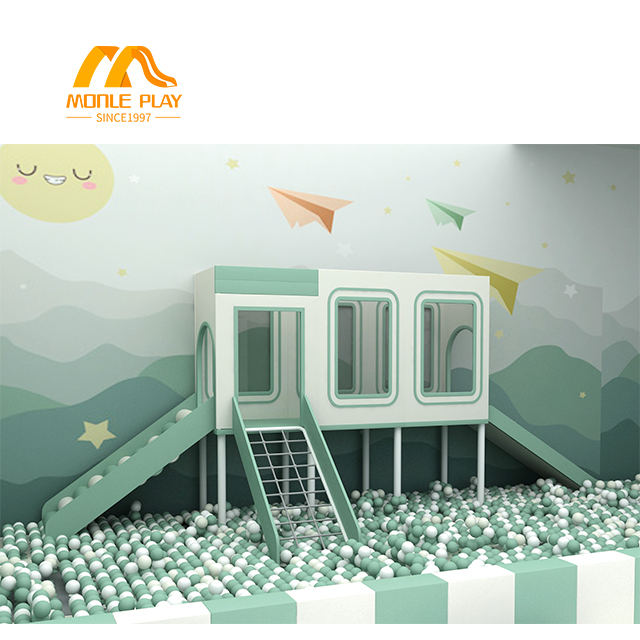
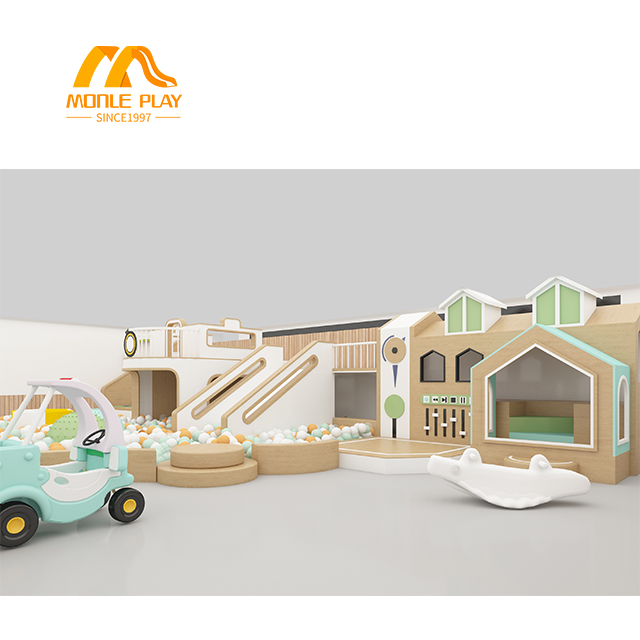
Commercial indoor play environments are engineered specifically for impact absorption and continuous collision prevention. The structural composition relies heavily on high-density polyurethane foam cores. These cores wrap around structural steel or heavy-duty PVC framing, providing a thick, protective barrier. Manufacturers then encase this padding in heavy-duty, commercial-grade 18-ounce to 22-ounce vinyl or PVC fabrics. This construction method ensures that every structural element is cushioned, effectively eliminating hard exposed edges that could cause injury during active play.
When you walk onto a site installing these systems, you will notice a distinct lack of exposed fasteners. Everything is wrapped, zipped, or stitched closed. Common components found in these installations include:
Deep ball pits designed for sensory immersion and safe landing zones, requiring thousands of crush-resistant polyethylene balls.
Foam climbing blocks and wedges that encourage gross motor skill development without the risk of blunt force trauma.
Padded ramps and staircases for accessible elevation changes, often featuring anti-slip vinyl texturing.
Enclosed knotless netting systems that secure multi-level structures and prevent falls from elevated platforms.
Interactive sensory panels integrated directly into padded walls, utilizing low-voltage electronics or mechanical gears.
Cushioned obstacle courses, including hanging foam bags, spinning cylinders, and squeeze rollers that challenge balance and coordination.
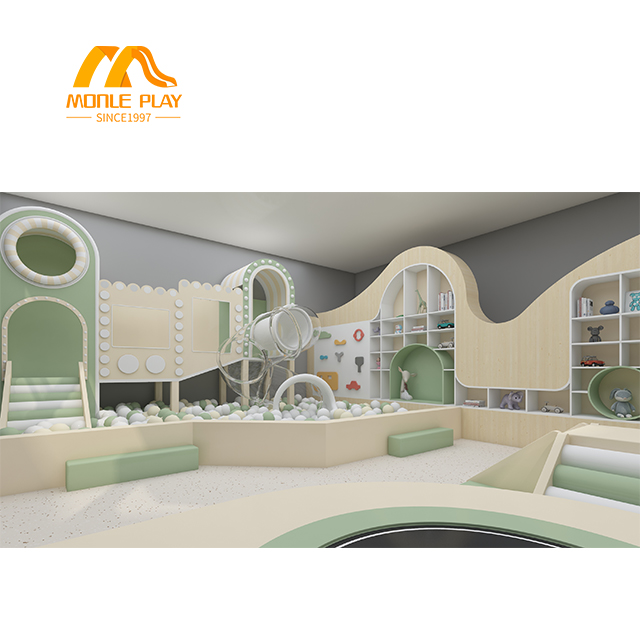
Webbed crawl tubes and clear acrylic observation bubbles that allow parents to track their children from the ground floor.
The primary design philosophy centers on continuous impact absorption. By ensuring that all points of contact are soft and yielding, facilities can offer a high-energy environment where younger children can explore physical boundaries with minimal risk of acute injury. The engineering focuses on containment. You are building a padded cage where the kinetic energy of a running child is absorbed by the environment itself, rather than transferred back into their joints.
Traditional playground equipment, often referred to as "hard play," is built to endure the elements and heavy, unstructured public use. The structural composition utilizes rigid construction materials. You will typically find 5-inch outside diameter (OD) powder-coated galvanized steel posts, high-density polyethylene (HDPE) plastics for slides and panels, treated timber for natural play designs, and heavy-duty stainless steel or galvanized hardware to secure the assembly.
These structures do not yield. If a child strikes a steel post, the post wins. Therefore, the safety mechanics rely entirely on the ground below and the spatial layout above. Common components in traditional settings include:
Elevated open-air platforms coated in slip-resistant PVC or plastisol that require careful navigation and balance.
High-velocity straight, spiral, or wave slides made from rotationally molded plastics or stainless steel.
Monkey bars, track rides, and overhead climbing rings designed to build upper body strength and grip endurance.
Swing sets, including belt swings, bucket swings, and inclusive molded seats, that introduce dynamic motion and momentum.
Freestanding climbing walls, geodesic domes, and rope matrix climbers utilizing steel-core nylon ropes.
Spring riders and seesaws that require cooperative play and weight distribution.
The design philosophy here contrasts sharply with indoor padded environments. Traditional playgrounds feature high-durability, weather-resistant structures. Because the equipment itself is unyielding, these setups rely entirely on specialized safety surfacing to mitigate gravity-induced fall impacts. Facilities must install and maintain materials like rubber mulch, poured-in-place (PIP) rubber, engineered wood fiber (EWF), or synthetic turf with a shock-absorbing pad beneath the equipment to comply with safety fall-height regulations.
Evaluating your target age group is the first step in selecting the right equipment. Infant and toddler motor milestones—such as crawling, rolling, balancing, and early standing—require supportive, forgiving surfaces. Early youth athletic play, on the other hand, demands structures that facilitate climbing, swinging, and building upper body strength. Soft Play environments cater exceptionally well to the former, providing a secure zone for early development where a stumble results in a bounce rather than a scrape.
You must also assess the required level of beneficial risk. Traditional hard play teaches vital spatial awareness and physical risk management. Children learn to gauge heights, grip strength, and momentum. They learn that falling hurts, which naturally regulates their behavior and teaches them to assess their own physical limitations. Conversely, padded environments provide a controlled setting for safe physical experimentation, allowing younger or more cautious children to build confidence without the immediate threat of a hard fall. Both approaches have developmental merit, but they serve entirely different psychological functions.
Spatial and layout flexibility differ significantly between the two options. Indoor padded structures are highly customizable and modular. They are typically designed on a grid system (often 4x4 feet or 1.2x1.2 meters per section). They can be engineered to fit irregular indoor footprints, including multi-story setups, under-stair configurations, or tight corner installations. This adaptability makes them ideal for retrofitting existing commercial spaces, such as abandoned retail stores or warehouse bays.
Environmental control and physical footprint requirements also dictate your choice. Multi-level indoor structures require specific ceiling height clearances. A three-level structure generally needs a minimum of 15 feet of vertical clearance to accommodate the frame, the padding, and the necessary safety gaps below the HVAC ducts and fire sprinklers. Traditional outdoor equipment requires substantial total square footage. You must account for setback distances from other structures, underground utility lines, and expansive safety fall-zone clearances extending outward from every elevated platform and swing set. A single swing set might require a fall zone that is twice the height of the pivot point extending in both directions.
Regulatory frameworks govern both types of play spaces, but the standards address different hazard profiles. In the United States, commercial indoor padded structures must comply with ASTM F1918 (Standard Safety Performance Specification for Soft Contained Play Equipment). This standard dictates material fire retardancy, netting strength, structural integrity, and the elimination of catch points for clothing or drawstrings. Fire marshals will heavily scrutinize these installations, requiring certificates of flame resistance for all vinyl, foam, and netting materials.
Traditional outdoor playgrounds fall under ASTM F1487 (Standard Consumer Safety Performance Specification for Playground Equipment for Public Use) and guidelines set by the Consumer Product Safety Commission (CPSC). These regulations focus heavily on head entrapment hazards, hardware protrusion, entanglement risks, and fall attenuation. The surfacing below the equipment must meet ASTM F1292 standards for impact attenuation, which involves dropping an instrumented headform onto the surface to measure the G-max and Head Injury Criterion (HIC) scores.
Liability profiles also diverge. Indoor setups utilize fully enclosed safety netting and padded barriers to actively prevent falls and collisions, creating a contained environment. The primary liability risks involve poor sanitation leading to illness, or structural failure due to neglected maintenance. Traditional playgrounds feature open-fall zones, relying on impact-attenuating surfacing and weather-related hazard monitoring (such as checking for ice or scalding hot surfaces) to manage risk. If the loose-fill surfacing is kicked away from the bottom of a slide, the liability risk spikes immediately.
Maintenance demands are a critical operational consideration. Indoor padded equipment requires rigorous, daily sanitization protocols to manage the high volume of physical contact. Maintenance teams must regularly inspect vinyl covers for punctures or seam tears, check foam for degradation, monitor netting tension, and execute labor-intensive ball pit deep cleaning. A torn piece of vinyl exposes the foam core, which acts like a sponge for bacteria and bodily fluids. You cannot ignore a tear; it must be patched or replaced immediately.
Traditional equipment maintenance focuses on environmental wear and structural integrity. Facilities must manage rust and corrosion prevention on metal parts, monitor UV degradation and color fading of plastics, perform routine hardware tightening, and continuously replenish or repair the safety surfacing to maintain compliant fall attenuation ratings. Wood components will splinter and rot. Steel will rust if the powder coating is scratched. Moving parts like swing hangers and swivel bearings require regular lubrication and eventual replacement.
Maintenance Task | Indoor Padded Structures | Traditional Outdoor Playgrounds |
|---|---|---|
Daily Inspections | Check for bodily fluids, torn vinyl, loose netting, foreign objects in ball pits. | Check for broken glass, displaced surfacing, vandalism, weather hazards. |
Weekly Tasks | Deep clean all surfaces with electrostatic sprayers, tighten frame bolts, patch minor vinyl tears. | Rake and level loose-fill surfacing, inspect moving parts (swings, spinners) for wear. |
Monthly Tasks | Empty and sanitize ball pits, inspect structural foam for compression, check fire suppression clearances. | Tighten all structural hardware, inspect concrete footings for heaving, check for rust/corrosion. |
Annual Tasks | Replace heavily worn vinyl pads, re-tension safety netting, professional deep clean. | Top off engineered wood fiber, patch poured-in-place rubber, touch up powder coating. |
Capital expenditures vary based on scale and site conditions. Custom indoor fabrication and padding are typically calculated by the cost per square foot of the structure's volume. The framing is relatively inexpensive, but the custom-sewn vinyl, specialized netting, and interactive electronic components drive up the material costs. Traditional heavy-equipment procurement involves purchasing large, pre-engineered steel and plastic modules. The equipment itself is a major line item, but the site preparation often equals or exceeds the cost of the structure.
Installation complexity is fundamentally different. Indoor assembly involves framing anchoring, precision vinyl wrapping, and lacing miles of safety netting. It is clean work, usually executed by specialized crews over a few weeks, unaffected by weather. Traditional installation requires heavy machinery access, extensive excavation, site grading, pouring concrete footings, and the specialized application of safety surfacing. A rainstorm can delay an outdoor installation by a week. Pouring concrete requires specific temperature ranges, and installing poured-in-place rubber requires dry conditions for the binders to cure properly.
Indoor padded play areas serve as powerful commercial anchors. Because these spaces are enclosed and highly visible, they allow parents to relax and disengage while maintaining a line of sight. This dynamic directly drives secondary spend at adjacent cafes, food courts, and retail spaces. The longer children play safely, the longer parents stay and spend money. You are essentially building a high-energy holding pen that keeps the primary spenders (the parents) on your premises. Soft Play installations in restaurants or shopping malls are rarely ticketed; their ROI is calculated by the increase in average ticket size from the captive audience.
Traditional play areas generally function as community anchors. They drive foot traffic to municipal parks, master-planned housing communities, or outdoor commercial lifestyle centers, enhancing property values and community engagement rather than generating direct, immediate revenue. A well-designed outdoor playground makes a housing development more attractive to young families, indirectly driving home sales. In a municipal setting, it fulfills a civic duty to provide free, accessible recreation.
Accessibility is a major focus in modern play design. Traditional playgrounds achieve ADA compliance through the integration of wheelchair ramps, physical transfer stations, inclusive bucket swings, and tactile ground paths. However, navigating a wheelchair over engineered wood fiber can be exhausting, and the sheer scale of outdoor equipment can be intimidating for children with mobility limitations.
Indoor padded environments offer distinct sensory-friendly advantages. They provide safe decompression spaces, low-impact sensory panels, and quiet zones that are highly beneficial for children with autism or sensory-processing sensitivities. Furthermore, the abundance of ground-level physical play options ensures that children of varying mobility levels can participate actively. The controlled lighting and acoustics of an indoor facility also allow operators to host "sensory-friendly" hours, dimming the lights and lowering the music to accommodate neurodivergent guests.
The primary risks associated with indoor padded environments include the high transmission of pathogens, public hygiene concerns, and rapid structural vinyl wear from heavy use. If a child gets sick in a ball pit, the entire system must be shut down and sanitized. To mitigate these risks, facilities must implement hospital-grade electrostatic sanitization schedules. This technology wraps the disinfectant around the complex shapes of the padded tubes and netting.
Enforcing strict "socks-only" policies prevents street dirt, rocks, and chewing gum from degrading the materials. Utilizing antimicrobial vinyl coatings during the procurement phase adds a layer of protection against mold and bacteria. Finally, securing quarterly professional maintenance for vinyl patching and netting repair extends the equipment's lifespan and maintains safety standards. Do not attempt to patch commercial vinyl with standard duct tape; it will peel off within hours and leave a sticky residue that ruins the aesthetic and attracts dirt.
Outdoor traditional playgrounds face risks such as extreme temperature exposure, vandalism, and the displacement of loose surfacing materials. A dark green plastic slide facing direct afternoon sun can cause second-degree burns. Mitigation strategies include specifying UV-stabilized plastics and lighter colors to reduce heat absorption and fading. Installing commercial shade sails or permanent steel canopies protects the equipment and the users from direct sun, significantly extending the life of the plastics.
Utilizing tamper-resistant security hardware deters vandalism and theft of components. Investing in unitary surfacing, like poured-in-place rubber or synthetic turf, over loose-fill materials ensures consistent fall protection without the need for constant raking and leveling. Loose-fill materials like wood fiber will inevitably be kicked out of high-traffic areas like the bottom of slides and under swings, creating dangerous hard spots that violate safety codes.
The decision between indoor padded structures and traditional outdoor equipment is dictated by the facility's environment and its primary business model. Choose indoor padded structures for family entertainment centers, daycares, restaurants, and retail spaces targeting children under 8, where parental relaxation and secondary spend are the primary goals. Choose traditional equipment for parks, schools, and outdoor commercial spaces requiring high durability, minimal daily oversight, and appeal to a broader age range.
Partnering with a reliable manufacturing partner streamlines structural compliance and layout planning. As an industry leader in engineering high-safety commercial infrastructure, Zhejiang MonleToys supplies premium soft play environments, custom-themed multi-level play mazes, and heavy-duty amusement structures certified to rigid ASTM and EN standards for worldwide entertainment venues.
Conduct a comprehensive site survey to determine usable square footage, vertical clearances, and underground utility locations.
Establish a clear capital expenditure and operational maintenance budget based on your internal staffing capabilities and cleaning protocols.
Consult with a certified playground safety inspector (CPSI) to review local compliance requirements and liability insurance implications.
Draft initial site plans with a commercial manufacturer to visualize traffic flow, capacity limits, and line-of-sight for parental supervision.
A: Soft play refers to play structures built from foam cores wrapped in PVC, vinyl, or fabric to absorb impact. Hard play (traditional playground equipment) uses rigid materials like steel, HDPE plastics, and timber, relying on the ground surfacing below the equipment to absorb impacts.
A: With proper maintenance and climate control, commercial soft play structures typically last 8 to 15 years, though high-traffic components (like vinyl padding and netting) may require replacement every 3 to 5 years.
A: While some manufacturers offer outdoor-rated soft play, it is generally not recommended. UV exposure and moisture rapidly degrade the PVC/vinyl covers and foam cores, leading to mold and structural failure.
A: Initial equipment costs vary by scale, but traditional playgrounds often have higher total installation costs due to excavation, concrete footings, and safety surfacing. Soft play typically incurs higher ongoing cleaning and maintenance costs.
A: In the United States, commercial soft play must adhere to ASTM F1918 standards, which dictate specifications for materials, structural integrity, netting, and fire retardancy.
A: A viable commercial soft play area requires a minimum of 200 to 500 square feet for a basic setup, with ceiling heights of at least 10 to 15 feet to accommodate multi-level structures safely.