

Views: 0 Author: Site Editor Publish Time: 2025-12-09 Origin: Site

Trampolines look fun, but many parents quietly worry about injuries. Are they harmless backyard toys or hidden high-risk equipment? In this article, we explore real risks, expert advice, and safer options. You’ll learn how to judge if Trampolines truly fit your family.
Trampolines carry real injury risks, especially for kids under six. Fractures, sprains, concussions, and neck injuries are common, and one bad landing can lead to weeks or months of recovery. Safety nets and padding help but cannot stop collisions or awkward landings on the mat.
Trampoline parks are not automatically safer than backyard trampolines. Shared surfaces, stronger bounce, and crowds increase collision risk and landing force. Studies suggest park injuries are often more severe and more likely to need surgery.
Major pediatric organizations, including the American Academy of Pediatrics, discourage recreational trampoline use. Their stance is based on long-term emergency room data. They support trampolines mainly in supervised sports or therapy settings with strict controls.
If you still use trampolines at home, strict safety rules and good setup are essential. One jumper at a time, no flips, constant adult supervision, safe placement, and regular equipment checks all help reduce (but not remove) risk.
There are many safer ways for kids to stay active. Biking, swimming, playgrounds, hiking, dance, martial arts, and team sports offer strong physical and social benefits with lower rates of severe injury.
In simple terms, trampolines are a high-risk form of play for children. Every year, tens of thousands of kids visit emergency departments because of trampoline accidents. These injuries happen at home, at friends’ houses, and in commercial parks. The pattern is so consistent that doctors now treat trampolines as a known injury source.
Doctors see the same kinds of trampoline injuries again and again. The most common are fractures of the arms and legs, especially around wrists, elbows, ankles, and knees. These often happen when children land on an outstretched hand or twist an ankle. Sprains and ligament strains are also frequent and can keep kids out of activities for weeks.
Head injuries are a major concern. Concussions can result from collisions with other jumpers, failed flips, or hitting the frame or ground. Even mild concussions may affect mood, sleep, and school performance for a while. More severe head injuries can have long-term effects on learning and behavior.
| Injury Type | Typical Cause | Potential Severity |
|---|---|---|
| Arm fractures | Falling on outstretched hands | Moderate to severe |
| Ankle/knee sprains | Twisting or uneven landings | Mild to moderate |
| Concussions | Collisions or failed flips | Moderate to severe |
| Neck injuries | Landing on head or upper back | Severe |
| Cuts & bruises | Contact with frame, springs, or ground | Mild |
Children under six are especially vulnerable on trampolines. Their bones are softer and less dense, so they break more easily. Their muscles and joints are not strong enough to control sudden twists and landings. Even a small fall can cause major damage.
Young kids also have limited balance and body control. They struggle to judge distance, speed, and timing on a moving surface. On a trampoline, that means more unexpected landings and more falls. They cannot correct in mid-air the way older children sometimes can.
Trampolines create risks that most other toys simply do not have. One of the biggest triggers is having more than one jumper on the mat. When several kids bounce together, the surface moves unpredictably. This leads to collisions and lost balance.
The “double bounce” effect is a key example. When one jumper lands just before another takes off, the second jumper is shot higher into the air. That might feel thrilling for a moment but can quickly turn into a dangerous fall. The higher the jump, the harder the landing.
Not every trampoline injury is severe, but some are. Simple fractures can heal with a cast and time. However, more complex fractures involving joints or displaced bones may need surgery with metal hardware. Recovery can take months and often includes physical therapy.
Ligament tears and joint injuries, such as serious knee or elbow damage, may also call for surgery. These injuries can limit a child’s movement and keep them out of sports and play for a long time. If not treated properly, they may cause long-term stiffness or weakness.
Safety nets and padding are now common on modern trampolines. They help prevent falls off the side and soften contact with frames and springs. Without them, many injuries would likely be worse. They are a useful layer of protection.
However, nets do not prevent most serious injuries. Collisions between jumpers happen inside the netted area. Bad landings after flips or high bounces also occur on the mat, not at the edge. Nets cannot change the forces involved when a child lands the wrong way.
Emergency room data shows that trampoline injuries are a steady problem year after year. The numbers include both backyard trampolines and trampoline parks. Many visits involve broken arms and legs, while others involve concussions and neck injuries. Trampolines are a predictable part of pediatric emergency care.
Injury rates often rise in warm weather and during school breaks, when kids spend more time on trampolines. Trampoline parks add another source of injuries that are not limited by season. Together, these patterns keep trampolines on the radar of doctors and safety experts.
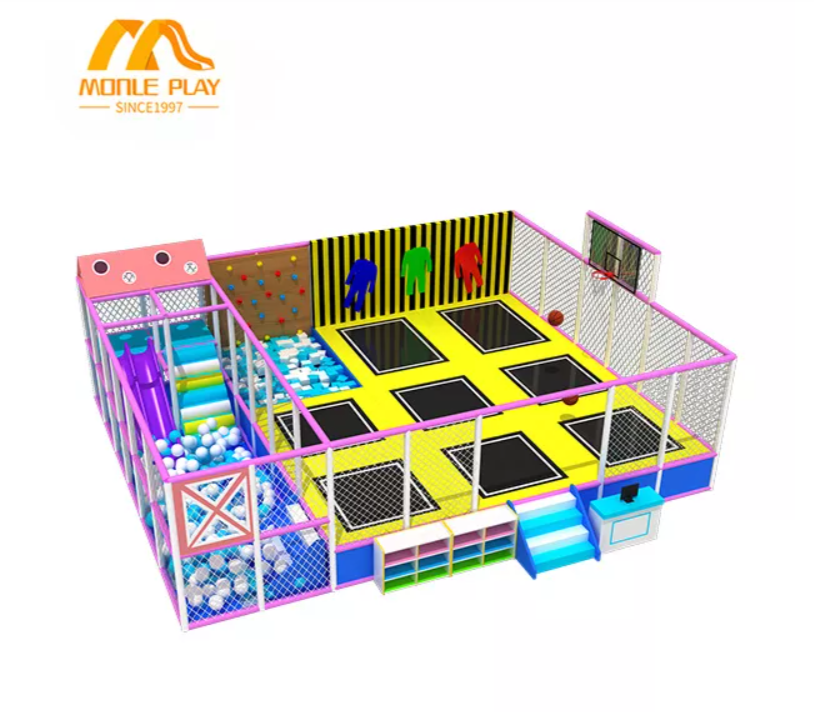
To many parents, trampoline parks look safer than backyard trampolines. There are rules on the walls, staff in uniforms, and big padded surfaces. The setting feels controlled and professional. It is easy to assume the risk must be lower.
In reality, trampoline parks introduce new types of danger. Shared jumping zones, stronger bounce, and higher crowd levels all change the risk picture. Hospital data suggests that some park injuries are more severe and more likely to need surgery than home injuries. So “indoor” does not automatically mean “safer.”
Trampoline parks typically connect many trampoline beds into one large field. Children move across them in every direction. This makes it hard to control how many people enter a space and how they interact. Mid-air collisions and awkward landings become much more likely.
Park trampolines are often designed to give bigger, more powerful bounces than most home models. This is exciting and part of the appeal. But greater height also means greater impact when kids land. With more speed and force, mistakes have bigger consequences.
Some studies suggest that trampoline park injuries are more likely to require surgery than home trampoline injuries. High-energy falls mean more complex fractures, especially around elbows, knees, and ankles. Growth plates and joint surfaces are sometimes involved, which adds to the long-term risk.
| Setting | Collision Risk | Landing Force | Surgery Likelihood |
|---|---|---|---|
| Home trampoline | Moderate | Moderate | Moderate |
| Trampoline park | High | Very High | Higher |
Pediatric experts base their advice on what they see in clinics and hospitals, not on marketing claims. Over time, they have formed a clear view of recreational trampolines. In general, they see trampolines as a high-risk way for children to play.
Their main concern is that many trampoline injuries are serious and preventable. They compare trampolines with other forms of exercise that do not carry the same level of trauma. This comparison shapes their recommendations to families.
The American Academy of Pediatrics (AAP) strongly discourages recreational trampoline use at home. They do not see trampolines as simple backyard toys. Instead, they consider them equipment with a risk level closer to some extreme sports.
The AAP does accept limited trampoline use in controlled, professional settings. Examples include gymnastics training, diving practice, and supervised physical therapy. In these environments, trampolines are treated as technical tools, not toys.
Some families already own trampolines or decide to keep them despite warnings. In those situations, the goal becomes risk reduction, not risk elimination. Parents need to treat the trampoline like sports equipment that demands rules and oversight.
This includes setting clear safety rules, choosing a safe location, and maintaining the trampoline over time. It also means limiting who uses it and how. Without these steps, the chance of a serious accident is much higher.
Good rules are simple, firm, and easy to remember. They only work if parents enforce them every time.
Key rules include:
One jumper at a time to lower collision and double-bounce risk.
No flips, somersaults, or “crazy tricks” because these moves are linked to neck and spine injuries.
Adult supervision at all times with an adult close enough to step in quickly.
No jumping onto the trampoline from other objects like decks or chairs.
No going underneath the trampoline while anyone is jumping.
Children should also be taught to stop jumping if they feel dizzy, scared, or out of control. Small decisions like this can prevent bigger accidents.
Good setup lowers the chance that a bad fall turns into a disaster. The area around the trampoline should be soft, clear, and level. Hard surfaces like concrete or stone should be kept well away.
Ideally, the trampoline sits on flat grass or another shock-absorbing surface. The frame and springs should be covered with firm padding. A full safety net should surround the jumping area and be used with the zipper or opening closed during play.
| Installation Factor | Safety Recommendation |
|---|---|
| Ground surface | Flat, level, non-slippery |
| Side clearance | 3–5 feet of open soft area |
| Overhead clearance | No branches, roofs, or wires |
| Frame and springs | Fully covered by padding |
| Enclosure | Secure, intact safety net |
Good placement does not guarantee safety, but it removes obvious hazards. When combined with rules and supervision, it greatly reduces the chance of the worst outcomes.
Trampolines wear out as they face sun, rain, wind, and heavy use. Weak or damaged parts raise the chance of sudden failure, which can trigger serious injuries. Regular inspection is essential.
Before use, someone should check the mat, springs, frame, padding, and net. Look for tears, frayed straps, missing springs, loose bolts, and rust. If anything seems cracked, thin, or unstable, the trampoline should not be used until repaired or replaced.
Different trampoline designs try to reduce specific risks, such as edge injuries or falls from height. These features can help in certain situations. However, no design removes the basic risk of high-impact landings and collisions.
Parents should see design differences as safety improvements, not safety guarantees. Good behavior and strong supervision still matter more than any feature list.
Traditional trampolines use rows of exposed metal springs around the mat. These can pinch fingers and toes and sit near where children land. Padding helps but often shifts or wears out over time.
In-ground trampolines sit level with the yard, which lowers the fall height from the mat to the ground. This can reduce harm when kids accidentally exit the jumping surface. Many people also prefer the cleaner look.
| Design Type | Edge Injury Risk | Fall Height Risk | Relative Cost |
|---|---|---|---|
| Spring | Higher | Moderate | Lower |
| Springless | Lower | Moderate | Higher |
| In-ground | Lower | Very Low | Highest |
Children need daily movement, but trampolines are not the only way to provide it. Many safer activities still deliver strong physical, mental, and social benefits. These options come with clearer rules, proven safety gear, and lower rates of serious trauma.
Simple outdoor play is powerful. Biking builds leg strength and stamina, especially when helmets and safe routes are used. Swimming trains the heart and lungs while staying gentle on joints. Supervised pools with lifeguards and rules add safety structure.
Structured sports programs add coaching, rules, and gradual skill development. This makes them strong, safer alternatives to casual trampoline play. Gymnastics classes build strength and coordination under professional supervision. Even when trampolines are used, they are tightly controlled.
Even with strict rules and good setup, accidents can still occur. Knowing how to respond can limit damage and speed recovery. The first steps are to stay calm, assess the child, and decide whether emergency care is needed.
Some signs clearly point to a serious injury. If a child cannot stand or walk on a leg, or if a limb looks bent or badly swollen, you should treat it as a possible fracture. In these cases, the child should be seen by a doctor quickly.
Head and neck symptoms are especially serious. Loss of consciousness, confusion, repeated vomiting, or complaints of neck pain all require urgent care. Avoid moving the child’s neck or back if you suspect spinal injury. Call emergency services or go to the nearest emergency department.
For minor injuries, basic first aid can help. Have the child rest and sit or lie down. Check for small cuts, bruises, or mild swelling. Clean minor wounds and cover them with a bandage if needed.
Cold packs wrapped in cloth can reduce swelling and pain. Apply them for about 15–20 minutes with breaks in between. Elevating the injured limb can also help if there is swelling.
Trampolines bring fun, fitness, and outdoor energy for many kids. Yet medical data confirms a higher injury risk than most activities. Younger children and trampoline parks face the greatest danger. If families still choose trampolines, strict rules and supervision matter. Products from MONLEPLAY add value with safer indoor designs and multi-functional play features. Parents should balance joy, safety, and long-term health before deciding.
A: Trampolines carry injury risks, especially for young children and unsupervised play.
A: Trampolines stress soft bones and weak balance, increasing fracture risk.
A: Trampoline parks often cause more collisions and higher-impact injuries.
A: Use one jumper, no flips, constant supervision, and regular equipment checks.
A: Biking, swimming, playgrounds, dance, and team sports offer lower injury risk.


