
English

Views: 0 Author: Site Editor Publish Time: 2025-11-06 Origin: Site

Indoor trampolines are becoming a popular choice for both family fun and commercial entertainment spaces. Customizing these trampolines ensures safety, durability, and an optimal experience for all users.
In this guide, we'll explore key customization factors, important safety standards, and the advantages of choosing a tailored trampoline for your space.
When considering a custom indoor trampoline, the first step is understanding the key dimensions that will shape your trampoline experience. Whether you're designing a trampoline for your family room or a commercial playground, customizing size, frame, and materials is essential for both performance and safety.
Custom trampolines are designed to fit the specific dimensions of the space they’ll occupy. For home use, smaller models can be customized to fit family spaces. These may range from 2-4㎡, perfect for tighter areas, such as living rooms or basements. On the other hand, commercial setups, such as trampoline parks or indoor play areas, often require large-scale designs. These could easily exceed 50㎡, allowing for a variety of features like obstacle courses or game panels.
The size isn't just about the total area. It’s important to think about the shape, too. Custom trampolines come in rectangles, squares, or even irregular shapes, depending on how well the design fits the available space. The length and width need to be adjusted to make the most of the indoor playground layout. It's not just about fitting the trampoline into a corner, but about ensuring there’s enough space around it for safety and easy access. Placement within the indoor space matters as well. You need enough clearance around the trampoline, avoiding walls or other equipment that could pose a risk.
The frame of your trampoline is an essential part of the customization process. For home models, lightweight frames made of aluminum alloy are ideal. They are easy to move, making them perfect for homes where the trampoline might need to be relocated. The aluminum frame is sturdy enough for occasional use but light enough to be practical for families.
In contrast, commercial models require heavy-duty steel frames. These are designed to handle frequent use, sometimes up to several hours each day. The steel frames ensure that the trampoline remains stable and secure under constant pressure and frequent jumping.
As for the net surface, there are two main material choices: polyester and polypropylene. For children, a softer, more flexible material is often chosen, offering a safe and gentle bounce. Polyester is commonly used because of its balance of durability and elasticity. For adult users or commercial setups where multiple users are jumping at once, polypropylene might be a better choice. It offers higher elasticity and can support more weight, ensuring durability and performance even under heavy usage.
When customizing a trampoline, safety is always the top priority. Custom padding is one of the most important safety features. High-density foam, such as EVA (Ethylene Vinyl Acetate), provides cushioning around the edges, ensuring that users are protected in case of falls. These foam pads can be adjusted in thickness depending on whether the trampoline is designed for kids or adults. Thicker padding is commonly used for commercial settings or family models used by younger children.
In addition to padding, functional elements like safety enclosures are crucial. Enclosures prevent users from falling off the trampoline and can be customized with mesh densities that prevent body parts from getting caught. The height of these enclosures is an important consideration, as they should be no less than 1.2 meters to fully contain the user and enhance safety.
Anti-slip strips are another useful feature, helping to keep the trampoline in place while it’s being used. These strips can be added to the trampoline’s frame or placed along the floor beneath the trampoline. They prevent the trampoline from moving during high-impact jumps, further reducing the risk of injury.
Noise reduction is an often-overlooked aspect of trampoline customization, especially in family and commercial settings. Trampolines can generate significant noise during use, which may be disruptive in residential areas or public spaces. Many custom trampolines incorporate silent shock-absorbing systems, such as noise-reducing springs or padding at the base. These innovations help keep the noise level below 60 decibels, creating a more pleasant experience for both users and bystanders.
These customizable features ensure that your trampoline fits not just the space, but the needs of its users. Whether it’s a quieter experience for family time or a durable, high-performance design for commercial play areas, these key dimensions and features are essential in creating the perfect trampoline.
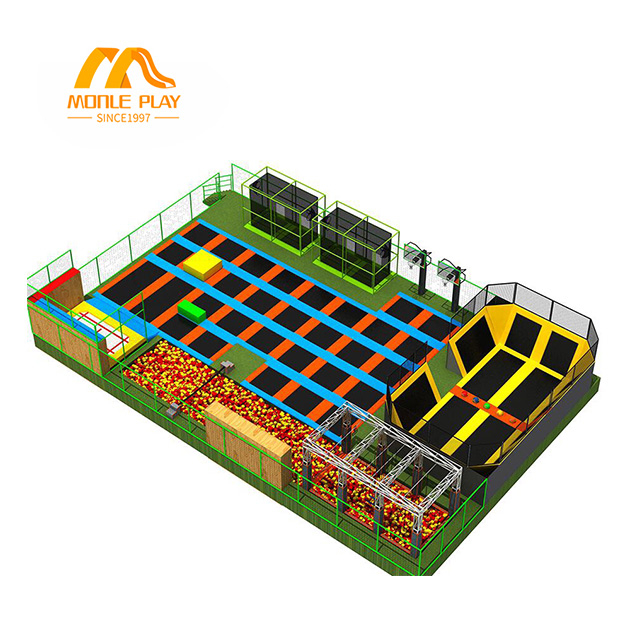
When it comes to designing custom indoor trampolines, safety must always be a top priority. Whether you're building a trampoline for a family home or a commercial play area, adhering to safety standards is critical. These standards help ensure that the trampoline can withstand repeated use, provide a safe jumping experience, and minimize risks for users.
Safety regulations for indoor playground equipment are set by various national and international bodies. Following these guidelines ensures that your trampoline is safe, durable, and up to code. For example, in the United States, trampolines must meet the ASTM F381-24 standard, which covers the safety requirements for consumer trampolines. This standard focuses on key elements like the trampoline’s frame strength, load-bearing capacity, and surface elasticity to prevent injuries from falls or improper bounce.
In Europe, the EN1176 standard applies to playground equipment, including trampolines. It sets guidelines for the overall design and materials used in playground equipment, ensuring they are durable enough for both indoor and outdoor use. The EN1176 standard also addresses the lifespan of materials, ensuring that the trampoline's frame, padding, and bounce surfaces maintain their integrity over time.
By following these national and international standards, you can ensure that your trampoline will offer a safe and enjoyable experience for users, while also being built to last.
Designing a trampoline that exceeds minimum safety standards involves thinking about potential injury risks and addressing them proactively. One of the best ways to enhance trampoline safety is through secondary protection layers. These are additional protective elements placed over parts of the trampoline that could pose injury risks, such as springs or the frame. For example, springs should be covered with protective pads or mesh to prevent direct contact with users, reducing the chance of pinches or falls.
Another important design feature is the double-fixed spring connection. This feature helps secure the springs to the frame, ensuring they don't come loose during use. It can be achieved through a combination of metal buckles and bolts, providing extra security against high-impact movements. This is especially important in commercial settings where trampolines are used frequently by different people. A secure connection prevents the springs from detaching, ensuring a safer environment for everyone.
Mesh enclosures are also an essential safety feature. These enclosures surround the trampoline to prevent users from falling off, providing a physical barrier between the trampoline and the surrounding area. The mesh should be dense enough to prevent users from getting limbs caught, yet flexible enough to allow for visibility. The height of the enclosure is also crucial, with a minimum recommended height of 1.2 meters to ensure it provides adequate protection.
Together, these design elements create a trampoline that’s not only compliant with safety standards but also optimized for user protection. By incorporating these features into your trampoline’s design, you can reduce risks and ensure that it’s suitable for both family use and commercial environments.
By focusing on these safety standards and design enhancements, custom indoor trampolines can provide a safe and enjoyable experience for all users. From strict compliance with national and international regulations to thoughtful design improvements, these efforts create a trampoline that meets the highest safety standards.
Creating a custom indoor trampoline involves more than just picking out materials and colors. It’s a detailed process that ensures the final product meets both safety standards and user expectations. From the initial design to the final inspection, each phase is crucial for delivering a high-quality, functional trampoline.
The customization process begins with demand communication. This is where we work closely with the customer to understand their specific needs. We discuss the space available for the trampoline, the intended user group (whether for families or commercial use), and the budget. This phase ensures we tailor the design to fit the exact requirements, preventing any surprises down the road.
Once we have a clear understanding of the needs, the design phase begins. Our team creates detailed plans and 3D renderings that outline the trampoline’s dimensions, materials, and features. The design is refined based on feedback, and any adjustments are made to ensure it meets the customer’s expectations for both functionality and aesthetics.
Next comes prototype testing. Before mass production begins, we produce a sample trampoline to test for bouncing performance, load-bearing capacity, and safety features. We run extensive tests to simulate real-life use, checking how the trampoline handles different weights, jumping frequencies, and even extreme conditions. This step helps us identify and resolve any potential issues early in the process.
Once the prototype is approved, the final step is mass production. Using the approved design and materials, the trampoline is produced in bulk. During production, we make sure that each unit is manufactured to the same high standards, ensuring consistency and reliability across all units.
Maintaining high-quality standards is essential throughout the customization process. One of the first steps in quality control is raw material inspection. All materials used, such as the frame, net surfaces, and padding, are carefully checked for strength and durability. Frames are tested for corrosion resistance, and net surfaces are inspected to ensure they’ll withstand repeated use without losing elasticity.
Performance testing is another critical step. Once the trampoline is assembled, we conduct a series of tests to verify its functionality. This includes load tests, where we check how much weight the trampoline can support without compromising safety or structure. We also perform UV resistance tests, especially for outdoor-ready models, to ensure that the materials won’t degrade when exposed to sunlight over time. These tests are essential for ensuring that the trampoline will perform well under real-world conditions.
Additionally, after the trampoline is installed and in use, we offer after-sales guarantees. This includes warranties covering structural damage, functionality issues, and general wear and tear. The after-sales process is designed to give customers peace of mind, knowing that any issues will be addressed promptly.
By focusing on each phase of the customization and quality control process, we ensure that every trampoline we deliver is safe, durable, and ready for use. This attention to detail throughout the design, testing, and production phases helps us create the best possible product for both home and commercial customers.
Custom indoor trampolines offer several benefits that set them apart from standard models. From maximizing space to enhancing safety and durability, these trampolines are tailored to meet specific needs, making them a smart investment for both home and commercial spaces.
One of the primary advantages of custom trampolines is their ability to optimize available space. Unlike standard trampolines, which come in fixed sizes, custom models can be designed to fit any area—whether it’s a small family room or a large commercial facility. This allows you to make the most out of your space, reducing wasted areas and ensuring that the trampoline fits perfectly into the room’s layout.
For example, if you have an oddly shaped room or an area with limited space, a custom trampoline can be designed to fit snugly in the available space. Trampolines can be made in different shapes, such as square, rectangular, or even irregular, depending on the area’s dimensions. This flexibility ensures that you won’t have to settle for a trampoline that doesn’t quite fit or doesn’t suit your needs.
Additionally, custom trampolines can be designed to take up less space when not in use. Compact models, especially for home use, can be designed to fold or store easily, allowing you to free up space when necessary. This makes them perfect for homes that require versatility or commercial areas that need to maximize their floor plan.
Safety is always a top concern when it comes to trampolines, and custom models address this issue directly. Custom trampolines can be designed with features that specifically meet the needs of the intended user. For example, for families with young children, the bounce surface can be made softer to reduce the risk of injury. Similarly, trampolines for commercial use can have enhanced safety features like stronger enclosures, more durable springs, and advanced shock-absorbing systems.
Another important feature is elasticity control. Custom trampolines allow for fine-tuning the bounce, depending on who will be using it. Children often need a trampoline with softer elasticity, while adults may require a trampoline that offers more rebound for higher jumps. Customizing the bounce not only makes the experience more enjoyable but also safer by reducing the risk of over-stretching the net or frame.
Noise reduction is another key safety and comfort feature. Trampolines can be designed with noise-reducing materials or features like silent shock absorption systems. This makes the jumping experience quieter, which is particularly useful for home environments or places where noise might be a concern, such as offices or gyms.
One of the most significant benefits of custom trampolines is their longer lifespan compared to one-size-fits-all models. Custom trampolines are made with high-quality materials that are selected based on the intended use, whether for casual family fun or high-frequency commercial use.
For commercial applications, trampolines are built with heavy-duty frames, stronger springs, and more durable net surfaces to withstand constant use. These trampolines are designed to endure the wear and tear of frequent jumping, providing a longer service life than regular, mass-produced trampolines.
For home use, custom trampolines can still last longer than standard models, as they are built with the specific requirements of the space and the user in mind. For example, family models can be designed to accommodate various weights and jumping frequencies, ensuring they stay in good condition for years to come. The materials used, such as high-strength polyester or polypropylene for the net surface and high-density foam for padding, are selected to offer both durability and performance.
In summary, custom indoor trampolines provide better space utilization, improved safety, and a longer lifespan than standard models. Their tailored design ensures that you get the most out of your investment, whether you're looking to fit a trampoline in a small room or create a high-performance play area for commercial use.
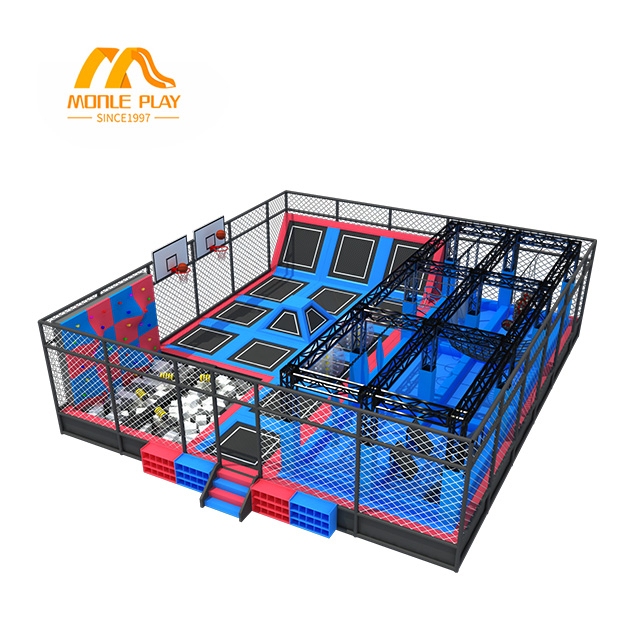
When it comes to choosing a custom indoor trampoline, there are distinct differences between commercial and family models. Each is designed with specific needs in mind, so understanding those differences can help you make the best choice for your space.
Commercial trampolines are built to handle high-frequency use. They need to support multiple users, sometimes for several hours a day, which means they require greater load-bearing capacity than family models. These trampolines must be strong enough to endure the constant jumping and activity in commercial environments like trampoline parks, gyms, or entertainment centers.
In addition to strength, commercial trampolines often have higher safety standards. This includes reinforced frames, heavier-duty springs, and additional features like obstacle courses or interactive game panels. These added features not only make the experience more fun but also attract customers looking for more than just a simple trampoline.
Another key difference is the larger size. Commercial setups need to be designed for bigger areas and accommodate more users at once. That means customizing the dimensions to fit the available space and ensuring the trampoline can support group activities or team-building exercises.
On the other hand, trampolines for home use are designed for occasional use. They are usually smaller and meant for families who may use them only on weekends or during special events. Safety is still a top priority, especially for families with young children. Home models can be customized to have softer bounce elasticity to reduce the risk of injury and improve the comfort level for kids.
Another important factor for home use is size and comfort. While a commercial trampoline might be overkill for a home, a family model should still offer a comfortable, safe jumping experience. Custom sizing allows you to fit the trampoline into your home, whether you want it in the backyard or a spacious living room. The bounce quality can also be adjusted, depending on the users' needs. For children, a gentler bounce is ideal, while for adults, you may want a slightly firmer rebound.
Here’s a simple breakdown of the key differences:
Feature | Commercial Models | Family Models |
Load-bearing Capacity | Higher, designed for multiple users | Lower, designed for occasional use |
Safety Standards | Stricter, with extra safety features | Standard, but still high priority |
Size | Larger, for spacious areas | Smaller, fits in home spaces |
Added Features | Obstacle courses, game panels | Basic trampoline features |
Bounce Quality | Firm, resilient for adults and groups | Softer, comfortable for kids |
Tip: Consider the space and how often the trampoline will be used when deciding between commercial and family models. Commercial models are more suited for high-traffic areas, while family models are great for occasional fun at home.
Custom indoor trampolines offer key benefits such as space optimization, enhanced safety, and improved durability. Whether for home or commercial use, their customization ensures a better fit for any space and user need. With safety features like adjustable bounce and protective enclosures, these trampolines provide a secure and enjoyable experience. For those looking to customize a trampoline, explore the options from MonleToys for a safer, longer-lasting trampoline tailored to your needs.
A: Custom indoor trampolines provide optimized space usage, enhanced safety, and longer durability, making them ideal for both home and commercial playgrounds.
A: Custom trampolines can be designed with adjustable bounce, safety enclosures, and padding, reducing risks for children and adults in playground settings.
A: Yes, commercial trampolines are built for higher load-bearing capacity and frequent use, while family models are tailored for occasional use in smaller playground spaces.
A: The price of custom trampolines varies based on size, features, and materials, offering options for both home use and commercial playgrounds.
A: Yes, custom trampolines can be made with UV-resistant materials, making them suitable for outdoor playground use.


